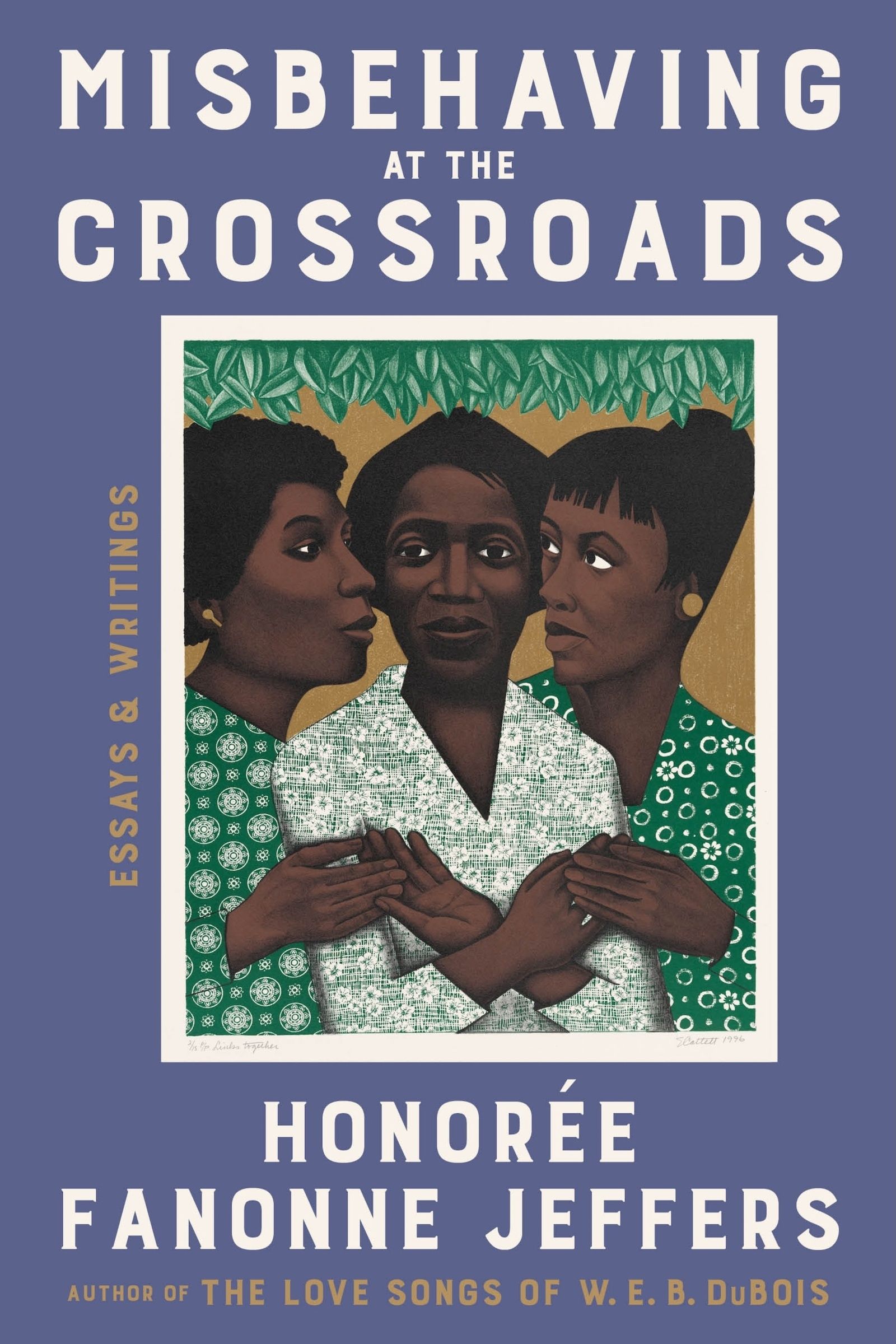
Misbehaving at the Crossroads
Essays & Writings
Honoree Fanonne Jeffers
368 Pages
On-Sale Date: 23/06/2026
ISBN: 9780063246645
Trim Size: 1.000in x 1.000in x 1.000in
Longlisted for the National Book Critics Circle award for Nonfiction The New York Times-bestselling, National Book Award-nominated author of The Love Songs of W.E.B. Du Bois and The Age of Phillis makes her nonfiction debut with this personal and thought-provoking work that explores the journeys and possibilities of Black women throughout American history and in contemporary times.
Honorée Fanonne Jeffers is at a crossroads.
Traditional African/Black American cultures present the crossroads as a place of simultaneous difficulty and possibility. In contemporary times, Kimberlé Crenshaw coined the phrase “intersectionality” to explain the unique position of Black women in America. In many ways, they are at a third crossroads: attempting to fit into notions of femininity and respectability primarily assigned to White women, while inventing improvisational strategies to combat oppression.
In Misbehaving at the Crossroads, Jeffers explores the emotional and historical tensions in Black women’s public lives and her own private life. She charts voyages of Black girlhood to womanhood and the currents buffeting these journeys, including the difficulties of racially gendered oppression, the challenges of documenting Black women’s ancestry; the adultification of Black girls; the irony of Black female respectability politics; the origins of Womanism/Black feminism; and resistance to White supremacy and patriarchy. As Jeffers shows with empathy and wisdom, naming difficult historical truths represents both Blues and transcendence, a crossroads that speaks.
Necessary and sharply observed, provocative and humane, and full of the insight and brilliance that has characterized her poetry and fiction, Misbehaving at the Crossroads illustrates the life of one extraordinary Black woman—and her extraordinary foremothers.
A People, Amazon, Seattle Public Library, Read Between the Spines, Ms. Magazine, Goode Reader, Bookstr, and Publishers Lunch, “Book of the Month” * A Publishers Weekly, BookPage, BookRiot, The Millions, Medium Loc’D Booktician, Read Between the Spines, and Flyleaf Books “Most Anticipated” * A Washington Post, AARP, Garden & Gun, Literary Hub, Vulture, Zibby Owens, Atlanta Journal-Constituion, Eagle Harbor Books, Deep South Magazine, She Reads, and Tertulia “Book to Read this Summer” —
“Deftly moving between sharp critique and an intimate, confessional tone, this astonishes.” — Publishers Weekly (starred review)
“In this genre-blurring collection, which shifts between memoir, history, and poetry, Jeffers charts her place in a line of women whose lives have been shaped by slavery, racism, and resistance. Organized by the concept of the ‘crossroads,’ a place of ‘difficulty and possibility,’ Jeffers’s essays recall a range of formative experiences, from her first encounters with Alice Walker’s writing to a searing meeting with James Baldwin. Her disappointments with political figures, including Barack Obama and Kamala Harris, are tempered by insight into the challenges they faced; Harris, for instance, was ‘expected not only to be perfect but to transcend perfection.’” — The New Yorker
“I would follow Jeffers’s voice anywhere. Her wide-ranging symphony of essays on Black womanhood is a treat — incisive, intellectual, intimate, funny, and formally inventive. I felt like I was listening to a brave yet vulnerable big sister riff blazingly on topics of history, family, politics and culture. Above all, she writes with a poet’s heart.” — Emily Raboteau, author of Lessons for Survival
“The poet ‘shall draw us in with love and terror’ and help us see more clearly our own times. Honorée Jeffers has done exactly that with this extraordinary collection of essays and writings. Sit with this book, revel in its use of language, struggle with the ideas, acknowledge that something intimate and vulnerable is happening on the page, and witness the expansiveness of Jeffers’s imagination.” — Eddie S. Glaude, Jr., author of We Are The Leaders We Have Been Looking For
“The work of Honorée’s mother, Dr. Trellie James Jeffers, has long inspired me, guided me, made me feel things familiar, and question the familiar. Honorée’s pen is as sharp as her mother’s and just as instructive. Yet different somehow still. With a poetic voice all her own, she holds our hands and ushers us (back) to places familiar, places forgotten — to the crossroads.” — Yaba Blay, author of One Drop: Shifting the Lens on Race
“Once again Jeffers reveals her genius for plumbing the depth and complexity of Black women’s lives. With compassion, rigor, and great beauty, she unveils the tensions that circumscribe public understanding of our womanhood while challenging the larger culture and us to see ourselves in the full flowering of our gendered humanity. A personal, moving, and revelatory tour de force of understanding, care, and analysis. And like always, Honorée leaves me wanting more. Brava!” — Blair LM Kelley, Ph.D., author of Black Folk: The Roots of the Black Working Class
“Jeffer’s nonfiction debut is incisive and necessary reading.” — People
“Equal parts memoir, history, polemic and poetry… There’s a difference between being at a crossroads—weighing an important decision at a crucial moment—and being at the crossroads: a fabled space in the Black diasporic tradition where powers can be granted, whisked away or reclaimed by the spirit world, sometimes for the price of a soul. With her nonfiction debut, Honorée Fanonne Jeffers comfortably inhabits this mythic juncture, telling the stories of Black women in her genealogy with a literary style that joyfully resists easy categorization.”
— New York Times Book Review
“Jeffers had a breakout hit in 2021 with her novel The Love Songs of W.E.B. Du Bois, one of The Post’s 10 Best Books that year. Her new collection of essays is animated by the same capacious interest in the history of Black women, from colonial times and earlier up to the present day. Some of the book’s most powerful writing is about her own family.” — Washington Post, “30 books to read this summer”
“Jeffers made a monumental pivot to fiction with 2021’s centuries-spanning epic, The Love Songs of W.E.B. Du Bois. Though certainly a leap, her debut novel continued what has become something of a career-long project for her, foregrounding the stories of heroic Black women. Now, Jeffers is carrying that project forward in still another mode, turning to personal and political essays to reflect on the complicated — at times seemingly impossible — position that Black women like her occupy in a culture determined to reduce them to virtually anything but themselves.” — NPR
“There is power in these writings….(Jeffers) will continue to misbehave, and we are all the better for it.” — Medium
“Part personal writing, part historical examination, this is a thought-provoking work threaded through with Jeffers’ poetic style.” — BookRiot
“A poetic meditation on intersectionality… Jeffer’s ability to infuse words with emotion inspires more than a few goose bumps…. one can only anticipate how the crossroads of her imagination and lived experiences will shape her next work of fiction.” — Atlanta Journal-Constitution
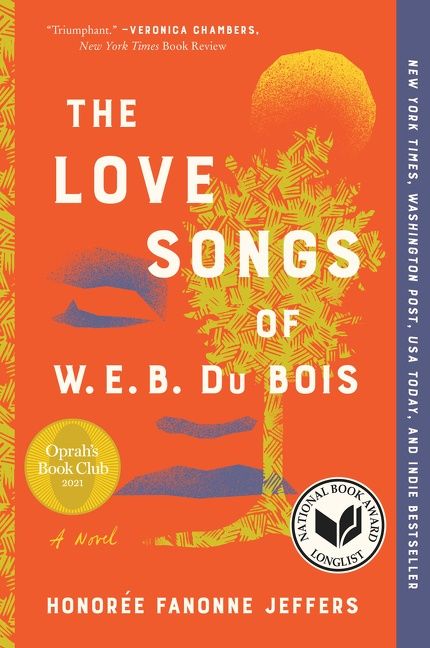
“Stunning.” — People, Top 10 Books of the Year, on The Love Songs of W. E. B. Du Bois
“The Love Songs of W.E.B. Du Bois is epic in its scope. [It] traces the story of a family, the town in Georgia where they come from, and their migration outward over generations. The word epic is overused these days, but this book was meant to be an epic and it is. . . . This is one of the most American books I have ever read. It’s a book about the United States. It’s a book about the legacy of slavery in this country. . . . And it’s also a book about traumas and loves that sustain over generations.” — Noel King, NPR, on The Love Songs of W. E. B. Du Bois
“Triumphant. . . . Quite simply the best book that I have read in a very, very long time. . . . An epic tale of adventure that brings to mind characters you never forget: Meg Murry in A Wrinkle in Time, Scout in To Kill a Mockingbird, Huckleberry Finn. . . . The historical archives of Black Americans are too often filled with broad outlines of what happened. . . . One of the many triumphs of Love Songs is how Jeffers transforms this large history into a story that feels specific and cinematic in the telling. . . . Just as Toni Morrison did in Beloved, Jeffers uses fiction to fill in the gaping blanks of those who have been rendered nameless and therefore storyless. . . . A sweeping, masterly debut.” — Veronica Chambers, New York